Urban Greening – Chicago

This is the first post in a new series about different efforts to reclaim unused spaces in urban areas.

A rendering of the future Bloomingdale Trail.

Chicago is on the verge of something big. The Windy City is working hard to redefine itself into an urban oasis. Ideas for parks and green areas are popping up left and right. Two that stand out are Bloomingdale Trail and Northerly Island Park. Both projects focus on reusing previously vacated civic space; Bloomingdale Trail will take over a former rail line, while Northerly Island Park reclaims a bygone airstrip on Lake Michigan. These projects  are indicative of a larger movement that we are noticing in cities across the globe to convert underused areas into functional destinations that people will revitalize urban centers. Continue reading »

Happy Earth Day: Why LEED for Homes?

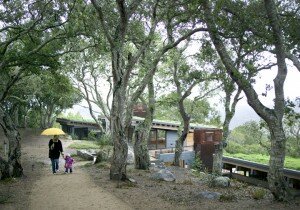
Caterpillar House by Feldman Architecture earned LEED Platinum certification in the LEED for Homes program in 2011. Photo by Joe Fletcher.

At Feldman Architecture, we have been fortunate to have clients coming the project kick-off meeting with a list of ‘green goals’ in mind. Today, with so much being published about sustainable design, the ideas that green design can be beautifully integrated into a project and promote technologies that help rather than harm the environment are widely disseminated.

One of the champions in the promotion of green design has been the United States Green Building Council, USGBC, with its well-known LEED, Leadership in Energy and Environmental Design, program. Buildings which have earned the LEED designation are known to have met and exceeded the standards of the local, state and federal requirements for green design. Here in California, our Title 24 and local requirements, some of which even require that projects meet the Green Point Rating system administered by BuildItGreen, tend to be quite progressive in terms of protecting the environment, but LEED tends to push the green building practice steps further. Continue reading »

Sinker Cypress

Historic photo of old growth Bald Cypress grove in Florida.

Sinker Cypress is one of the most stunning and beautiful woods that we at Arc Wood & Timbers have the honor to reclaim and custom mill for our clients. Its rich color ranges from deep honeycomb gold to dark olive green depending on the water regions where the logs are found. Sinker Cypress (also known as Deadhead Cypress, Heart Cypress, or River Recovered Cypress) describes harvested trees that sank as they floated down rivers in log rafts to the nearest sawmill. Continue reading »

Follow Up: The New Edible Landscape

It looks like Leslie’s tips on starting your own edible garden have garnered some serious attention. In the April 2013 issue of Sunset, one of Leslie’s projects is featured as one of ten ways to get planting this spring. You can get a taste of the article on their website, but make sure to check out the magazine for the full article.

Home Economics: The Urban Partnership at the Bullitt Center

The 1987 United Nations report “Our Common Future,” defined sustainable development as “development that meets the needs of the present without compromising the ability of future generations to meet their own needs.” Since then the design community has debated the meanings and applicability of sustainability and corollary terms such as sustainable design, green architecture and high performance buildings. Sim Van der Ryn offers a definition for ecological design as “any form of design that minimizes environmentally destructive impact by integrating itself with living processes.” What these terms share is the hope for creation of a built environment that might lead to a kind of balance and stability in a world where we have very little of either. Continue reading »

Book Review – Getting Green Done

Did you ever wonder how a ski resort can call itself sustainable? Auden Schendler, the Vice President of Sustainability at Aspen Resorts, has to answer this question often. In his book, Getting Green Done, he uses his answer as a foothold for a much larger question: how do we tackle the issue of climate change? Continue reading »

Solar Services

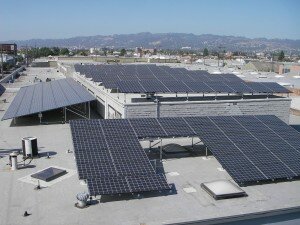
The recent past is full of paradigms that are obsolete, including the idea that residential photovoltaic solar arrays are extremely expensive systems to purchase install, and maintain. Gone are the days when the photovoltaic array had a lower return on investment than a thermal hot water system. The concept of a “payback period”? That is so 2005. Welcome to the current paradigm: Solar Services. Putting solar PV panels on your roof has never been easier or more affordable.

Black Tree – A Solar Charging Station

Conceived by architect Milos Milivojevic for a public park in Serbia, this tree-like park folly cleverly supports a solar panel canopy with its sculptural trunk and branches. Continue reading »

Sustainable Sidebar: Alternative Wall Systems

From alternative structural material to hanging gardens, there are lots of different ways to go green with your walls. There are many ways to make sustainable materials work to your advantage, as this project by students at the Rural Studio illustrates. They used tires filled with soil, then covered them in stucco to create the base of this beautiful chapel in Sawyerville, Alabama.

Continue reading »

Thinking Beyond LEED at SXSW Eco

Blair McCary addresses the crowd at SXSW Eco. Bill Reed and Paula Vaughan are seated.

This post was originally published at Dwell.com and has been reprinted with permission.

By Addie Broyles

Bill Reed helped develop the Leadership in Energy and Environmental Design (LEED) certification, but at a panel during the South by Southwest Eco conference, he explains why it’s time to move on.

“LEED is a great starting point. It’s the reason we’re able to be in this room and have a common language,” he says. “But it was never meant to be used as a measuring stick.” Reed, along with Atlanta-based architect Paula Vaughan and Vancouver engineer Blair McCarry, both of Perkins + Will, argue for a more holistic approach to “sustainable design” in a panel called “Beyond LEED: Living Buildings and the 2030 Challenge” at SXSW Eco, an offshoot of the sprawling Austin festival that takes place every March. Continue reading »